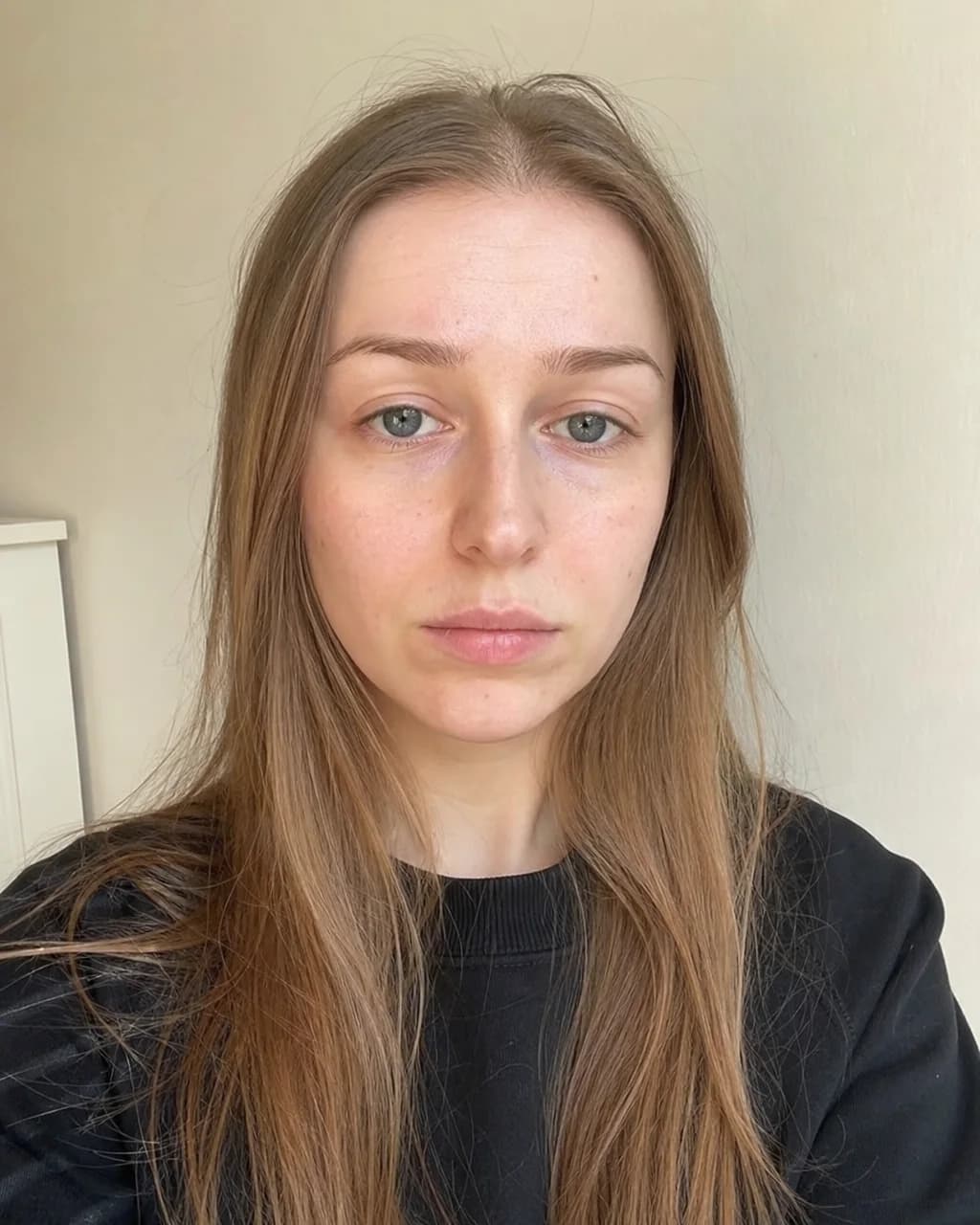
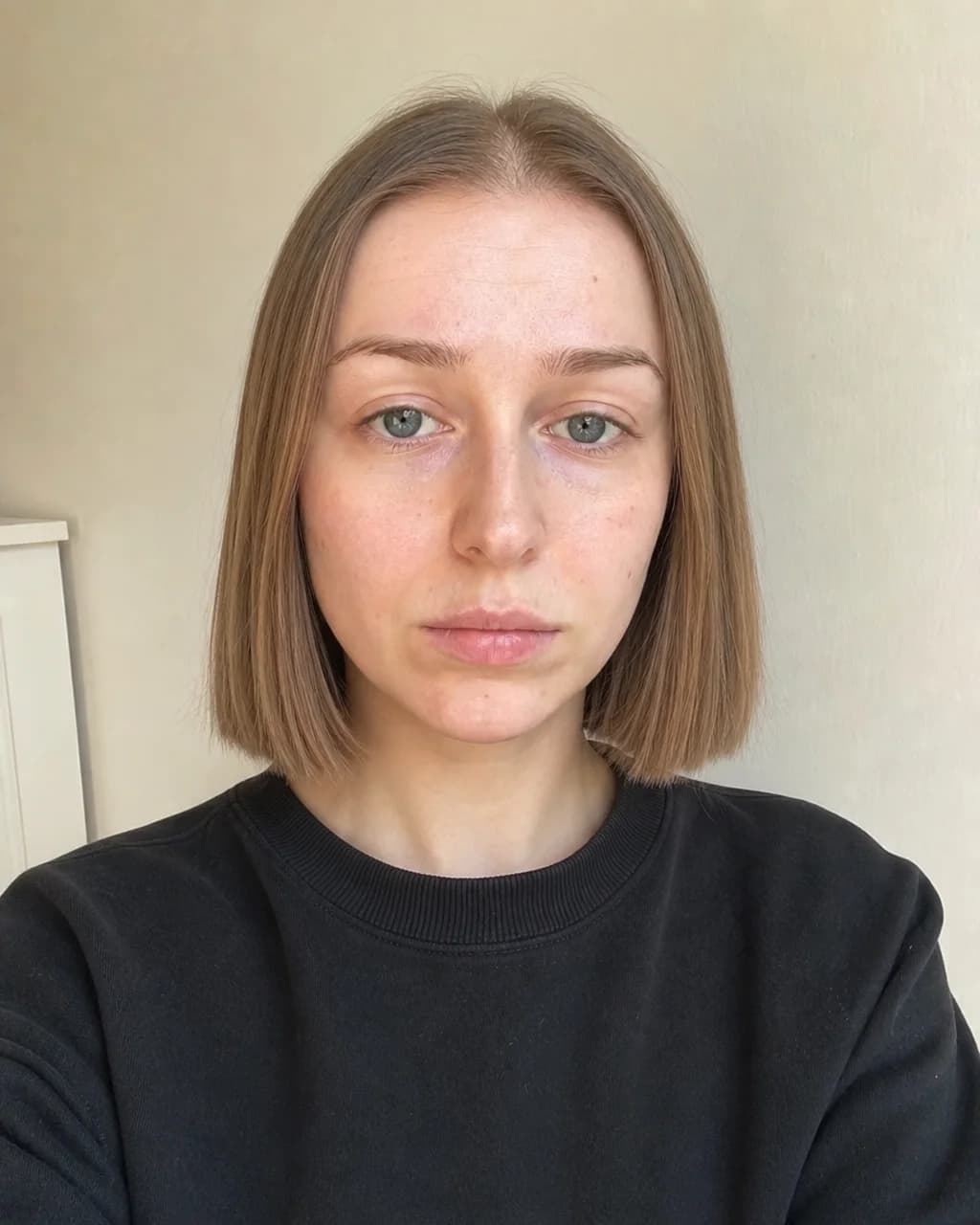
Long, fine hair to a blunt bob
This is achievable now because the starting hair is longer than the target cut. The main risk is not length. It is making fine hair look falsely dense or adding a thick perimeter the person does not have.
- 1Starting pointLong, straight, fine hair with a full hairline.
- 2RecommendationA chin-length blunt bob with minimal graduation.
- 3Honest catchThe blunt edge can look stronger, but the preview must not invent more strands.
- 4Barber or stylist noteKeep the perimeter blunt, preserve weight, and avoid heavy thinning.
One haircut, from three angles
The front tells you how the cut frames the face. The profile tells the stylist where the line sits, how the back carries weight, and whether the silhouette is actually the one you want.
 FrontThree-quarterProfile
The useful comparison changes with the hair
Each example tests a different failure mode. The goal is not to make every subject look younger or fuller. It is to show a cut while keeping the traits a barber will still be working with.
 50 percent of the after image is visible. The same fictional man with a realistic buzz cut
Fine, thinning hair to buzz cut
A buzz cut should shorten the hair, not erase the visible density pattern or move the temple corners forward.
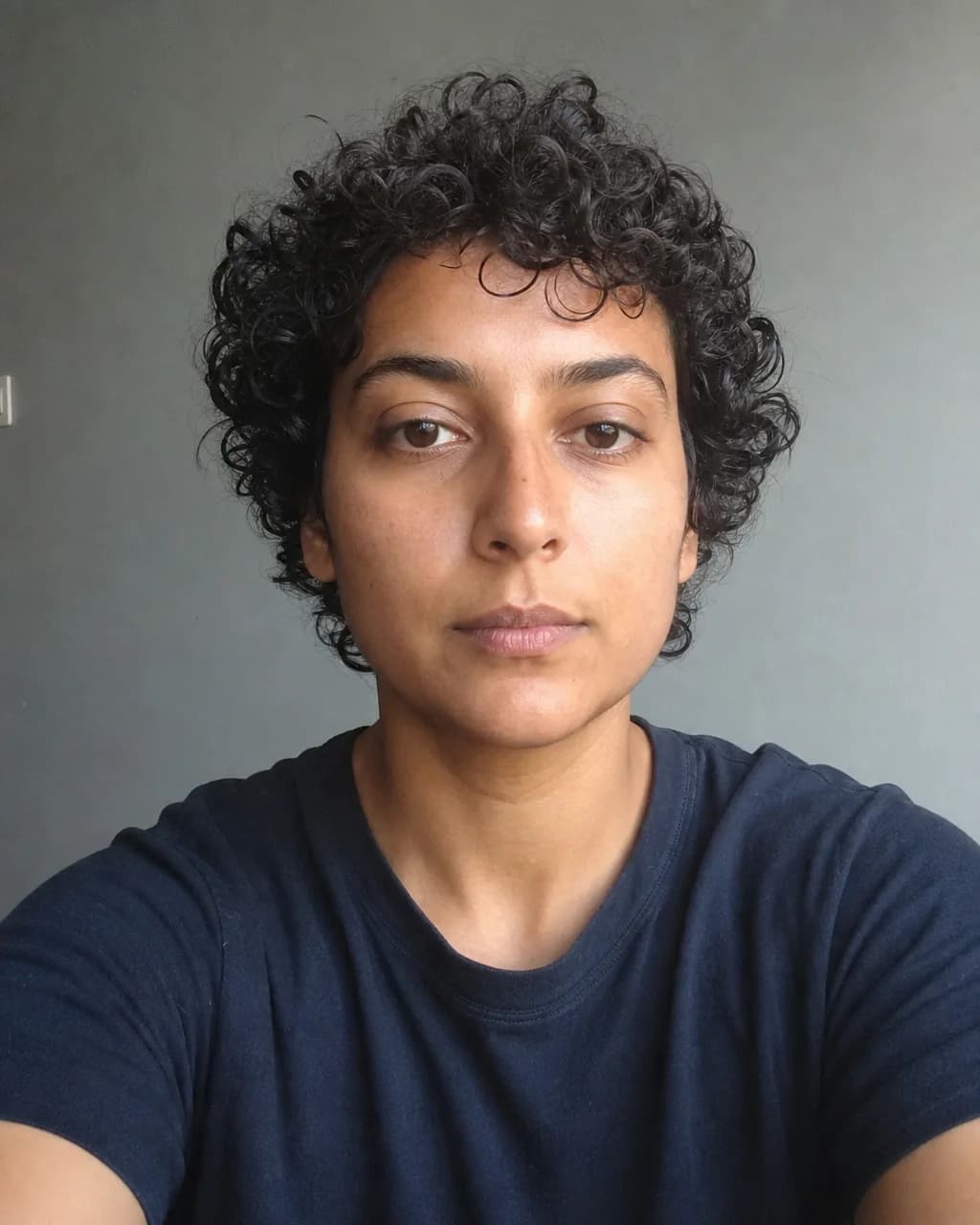 50 percent of the after image is visible. The same fictional person with a curly shag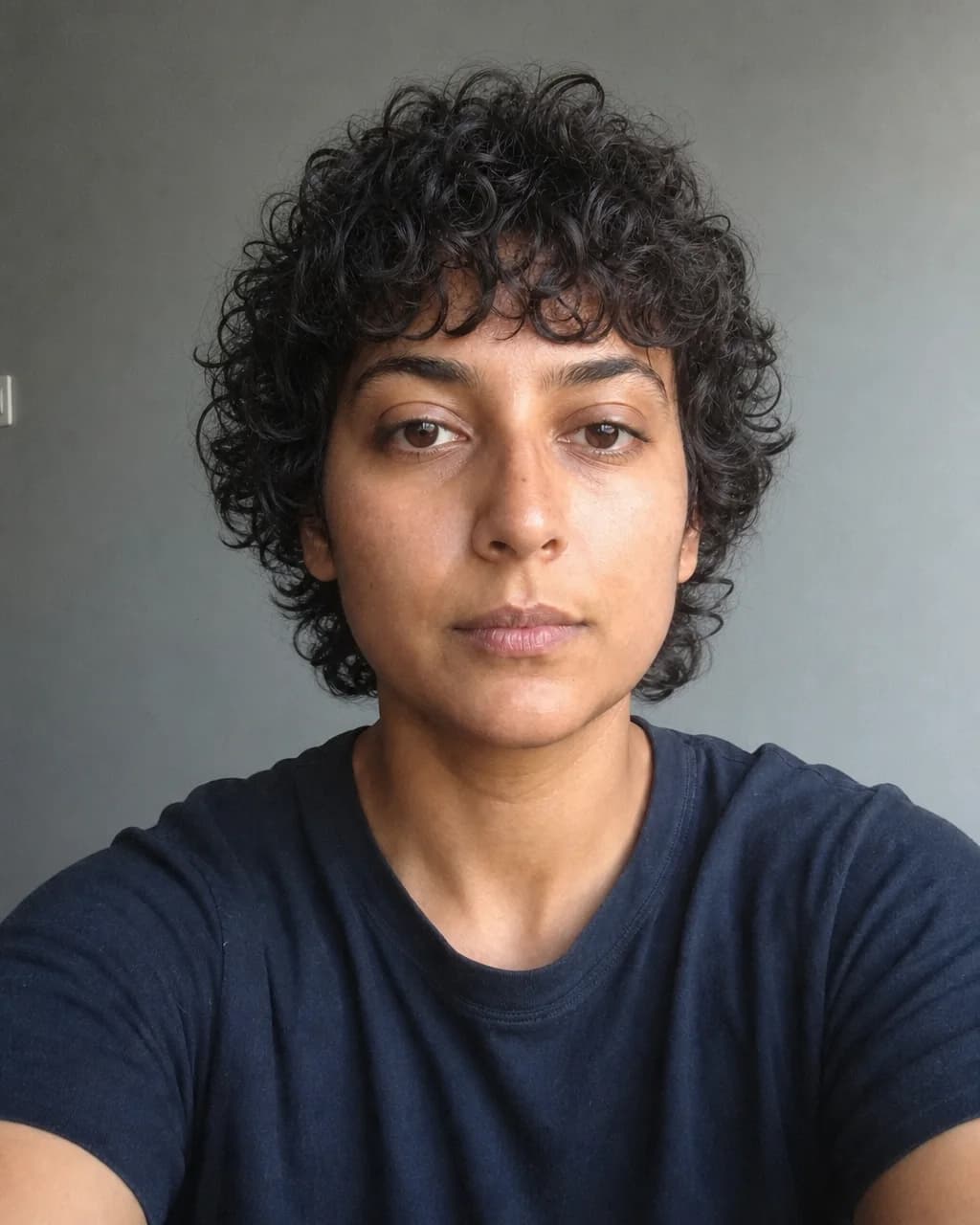
Short curls to curly shag
The curl pattern stays recognisable while the shape gains a fringe, layers, and more length around the back.
 50 percent of the after image is visible. The same fictional man with a curly taper
Very short coils to curly taper
This is the hard case. The requested top needs more length, so the honest answer includes a grow-out warning.
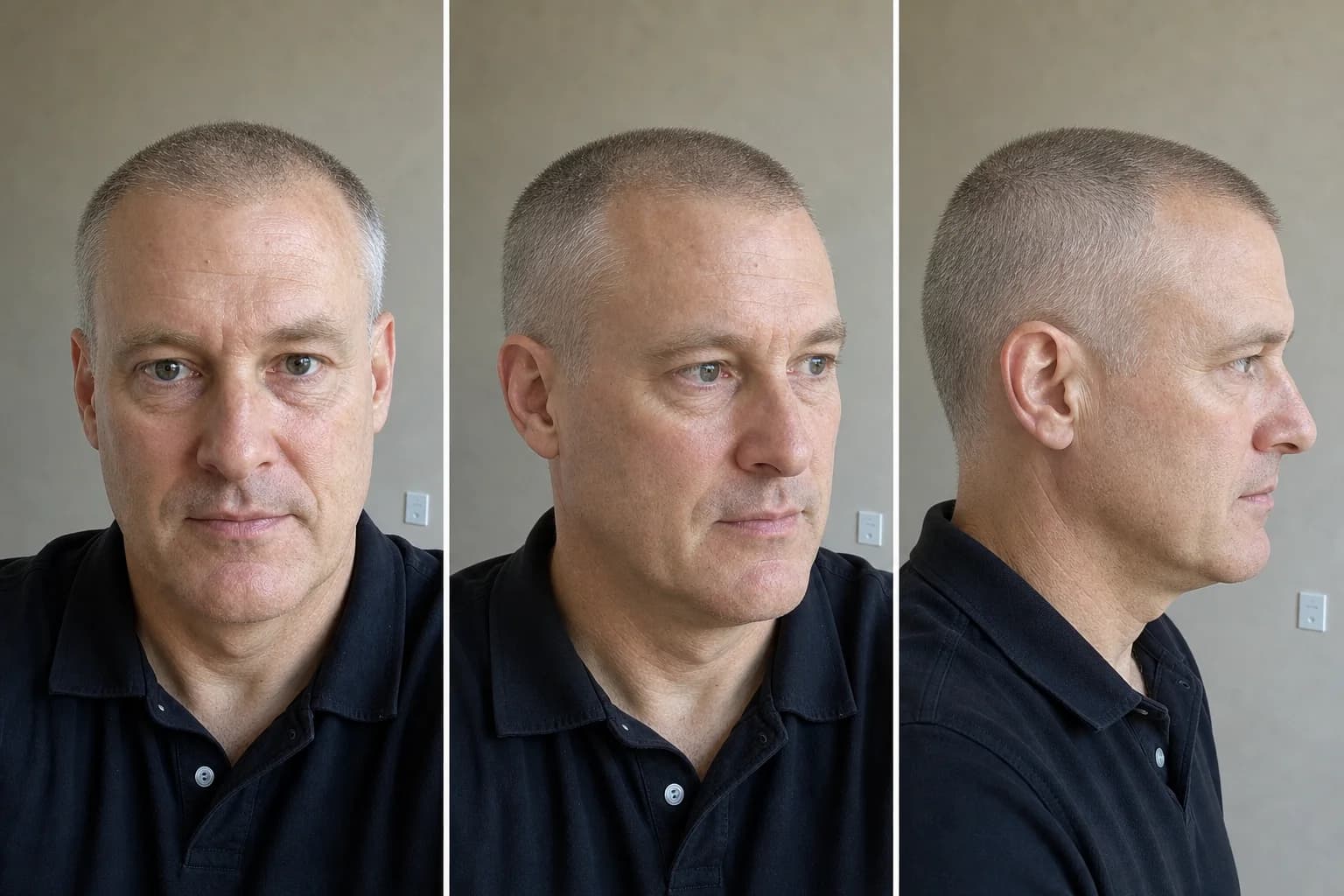
Why the profile matters
A three-angle sheet exposes the head shape, crown coverage, and taper. That is much more useful at the barber than one polished front image.
Change the haircut, not the person
| Part of the image | Allowed to change | Should stay fixed | Why it matters |
|---|---|---|---|
| Hair shape | Length, layers, fringe, taper, parting | Natural texture and strand pattern | The salon works with the texture you have. |
| Hair coverage | Where cut hair falls | Density, scalp visibility, temple recession | Added coverage creates a flattering but unsafe promise. |
| Face | Nothing | Features, skin texture, age, expression | You need to judge the haircut on your actual face. |
| Photo | Hair only | Pose, clothes, background, light | A surgical edit makes the comparison easier to trust. |
From one photo to a barber decision
Add a clear front photo
Use ordinary light, no hat, and keep the current hair visible.
Correct the hair profile
Fix any guess about length, texture, density, or hairline before ranking cuts.
Choose the cut and views
Pick from the library, use a reference photo, or describe the haircut in your own words.
Haircut before and after FAQ
Does moving the before and after slider use image credits?
No. Every example on this page is already generated. The slider only reveals two stored images, so you can move it as often as you want without calling an image model.
Is a generated haircut a promise of the salon result?
No. It is a planning concept. Your barber or stylist still needs to account for growth patterns, shrinkage, cowlicks, damage, and how the hair behaves away from a photo. The useful preview keeps those limits visible and gives you better questions to ask.
Why show three angles instead of one front view?
The profile reveals the silhouette, taper, fringe projection, and weight at the back. Those details often decide whether a haircut works, but a front-only filter cannot show them.
Can I make a haircut before and after with my own photo for free?
Yes. The hair analysis, recommendations, and full style library are free. Your first two personalized images are free and do not require an account.