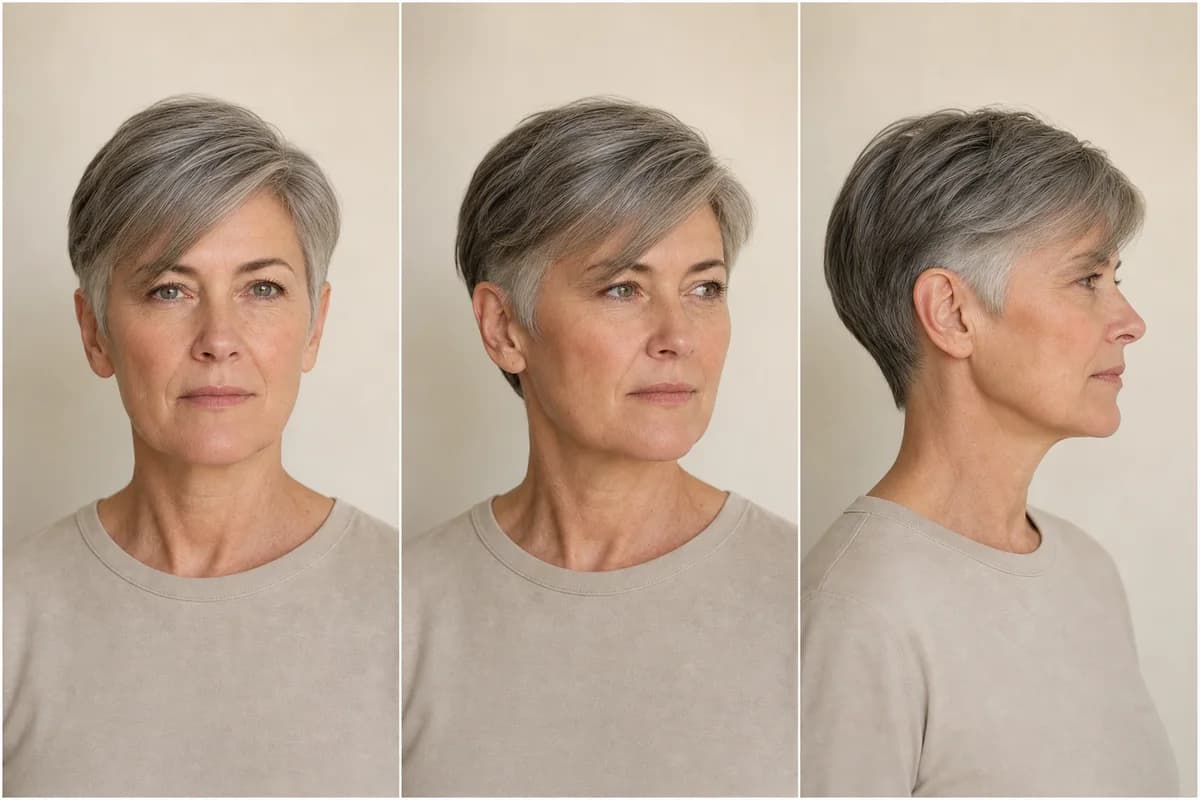
Shape suggests the goal. Hair decides the cut.
A round face guide may suggest height, but fine hair may not hold a tall quiff. A long face guide may suggest a fringe, but a strong cowlick can fight it. Start with the visual goal, then filter it through the hair you actually have.
- 1Face shapeWhere height, width, and angles sit around the face.
- 2Texture and densityWhether the shape can hold, collapse, shrink, or expose scalp.
- 3Length and hairlineWhat is achievable now and where framing hair can begin.
- 4Daily effortWhether the cut still looks right without a ten-minute blow-dry.
What each shape is usually trying to balance
These are design directions, not beauty rules. If you like a strong jaw, prominent cheeks, or a long silhouette, you do not need to hide it. The best haircut supports the look you want and still works with your hair.
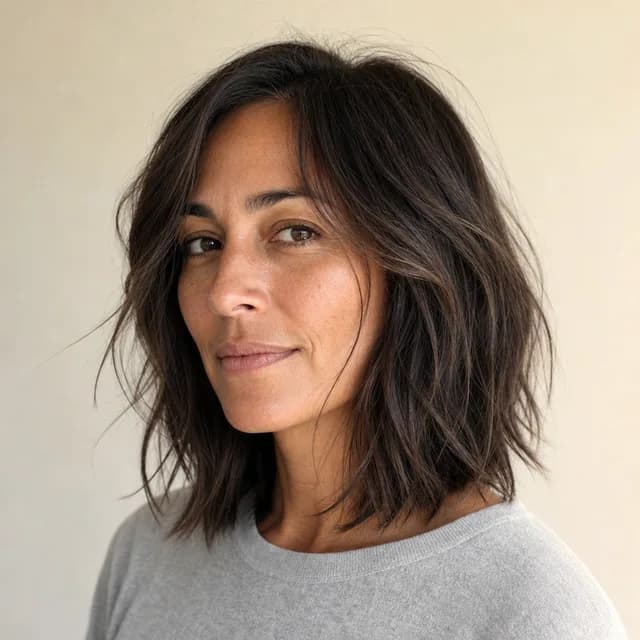
Oval face
- Usual goal
- Keep the natural balance rather than forcing more height or width.
- Try first
- Textured lob, pixie, crop, bob, or soft layers.
- Watch for
- Very heavy length with no shape can pull the face downward.
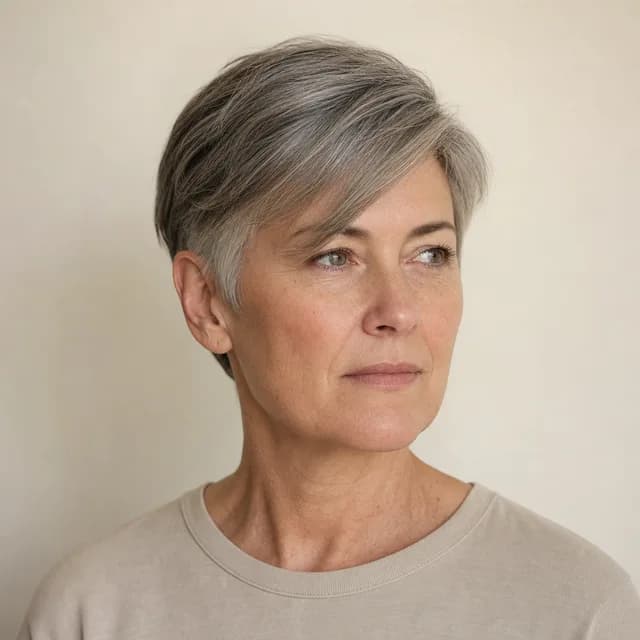
Round face
- Usual goal
- Add a little height or a diagonal line instead of width at the cheeks.
- Try first
- Side-swept fringe, long layers, textured crop, or an off-center part.
- Watch for
- A wide, blunt shape ending at the fullest part of the cheek can add more width.
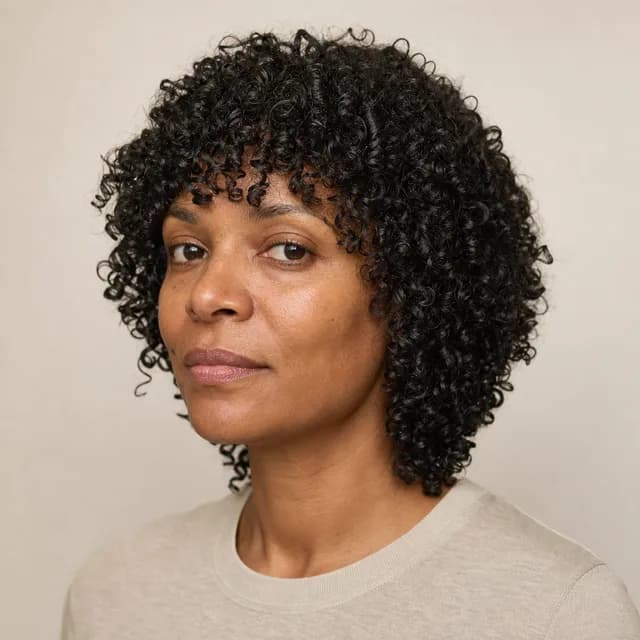
Square face
- Usual goal
- Choose whether to soften the jaw or make the strong angles the feature.
- Try first
- Curly shag, textured lob, longer layers, or a soft side fringe.
- Watch for
- A very sharp jaw-length line can repeat the same angle if that is not the goal.

Heart-shaped face
- Usual goal
- Balance a wider forehead with weight or movement near the jaw.
- Try first
- Chin bob, curtain bangs, side bangs, or face-framing layers.
- Watch for
- All the volume at the crown can make the upper face look wider.
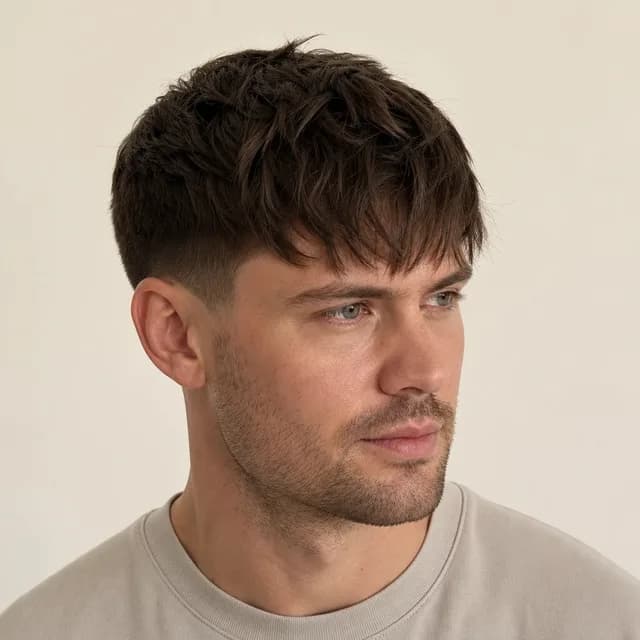
Long or oblong face
- Usual goal
- Add width and reduce uninterrupted height through the center.
- Try first
- Textured fringe, shoulder shag, curtain bangs, or a fuller bob.
- Watch for
- High fades with tall volume on top can lengthen the silhouette further.

Diamond face
- Usual goal
- Soften or balance prominent cheekbones while keeping the forehead and jaw open.
- Try first
- Butterfly layers, side bangs, chin bob, or textured medium length.
- Watch for
- Maximum width exactly at the cheekbones can exaggerate the widest point.
The same face can need a different answer
| If the guide says | But your hair is | The practical adjustment |
|---|---|---|
| Add height to a round face | Fine or thinning | Use shorter texture and controlled lift instead of a tall, dense quiff. |
| Add a fringe to a long face | Strongly receded at the temples | Use an irregular side-swept fringe rather than a dense straight line. |
| Soften a square jaw with waves | Straight and resistant to styling | Use layers and an off-center part without pretending the hair will curl. |
| Add jaw-level width to a heart face | Coily with strong shrinkage | Plan the dry shape and shrinkage, not the stretched cutting length. |
Use the estimate, then challenge it
Start with a clear front photo
Use a neutral head angle and keep the jaw, hairline, and current shape visible.
Correct the estimate
Change any face shape or hair trait that does not match what you know about yourself.
Compare the real tradeoffs
Look for achievable now, grow-out, density, and daily styling notes before generating.
Face shape and haircut FAQ
How do I know what face shape I have?
Look at the relative width of the forehead, cheekbones, and jaw, plus the length from hairline to chin. Treat the answer as an estimate. Camera distance, lens distortion, head angle, facial hair, and even the current hairstyle can change how the outline looks in one photo.
Is face shape the most important part of choosing a haircut?
Usually not. Texture, density, current length, hairline, growth patterns, and the amount of daily styling often determine whether the cut can actually look like the reference. Face shape is a useful final nudge, not the whole decision.
What haircut works for every face shape?
There is no single universal cut, but adjustable shapes such as a textured lob, soft layers, a side-swept fringe, and a textured crop can be tuned by changing length, parting, and where the volume sits.
Can I correct the face shape estimate in the tool?
Yes. The estimate is shown as an editable part of the hair profile. You can remove it or choose a different shape before the recommendations are ranked.