
Shorter does not always mean less maintenance
A very short pixie may take little daily work but lose its outline quickly. A chin bob needs more drying time but can grow out for longer. Decide whether daily effort or salon frequency matters more.
- 1Fine hairKeep a clear perimeter or selective top layers without removing too much weight.
- 2Thick hairControl bulk through the interior while preserving a deliberate outer shape.
- 3Curly hairPlan the bob or pixie by the dry curl position and normal shrinkage.
- 4GlassesCheck the sideburn, fringe, and ear area from the front and profile with frames on.
Eight modern shapes without age stereotypes
The most useful reference matches the hair's density and texture, not only the model's age or color.
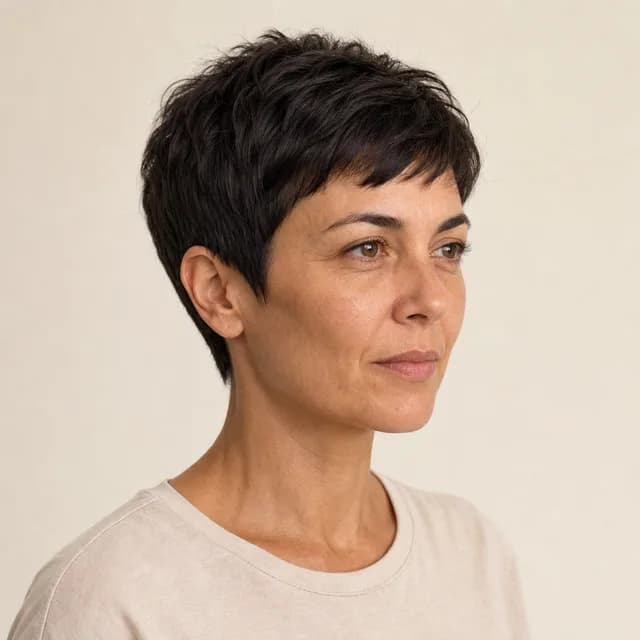
Classic pixie
- Why it works
- The compact length can make daily styling fast while keeping a clear silhouette.
- Best starting point
- Fine to thick straight or wavy hair when frequent shape trims are acceptable.
- Check before cutting
- A short cut exposes the hairline, crown, ears, and head shape more clearly.
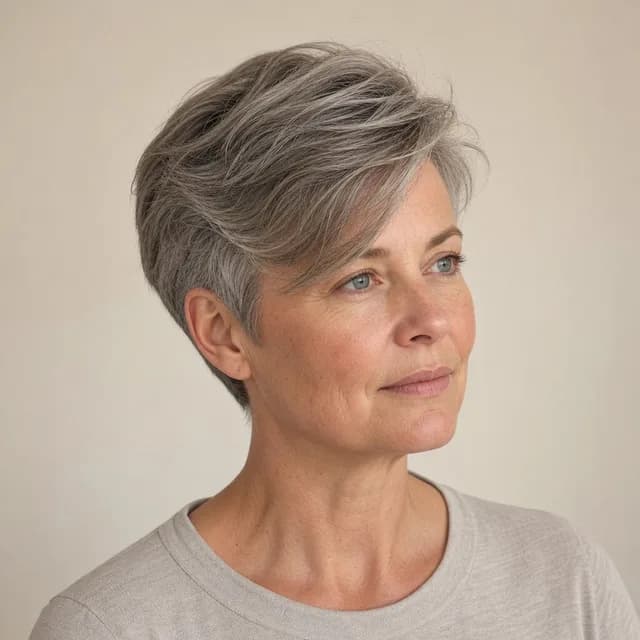
Long pixie
- Why it works
- It offers short-hair ease without removing all movement around the face.
- Best starting point
- Straight or wavy hair with enough density for a longer fringe.
- Check before cutting
- The fringe may still need blow-dry direction and can separate on very fine hair.

Silver bixie
- Why it works
- It keeps some perimeter weight while shorter crown layers add shape.
- Best starting point
- Fine to medium straight or wavy hair that needs flexibility between a pixie and bob.
- Check before cutting
- Too much texturising can make fine silver ends look sparse.
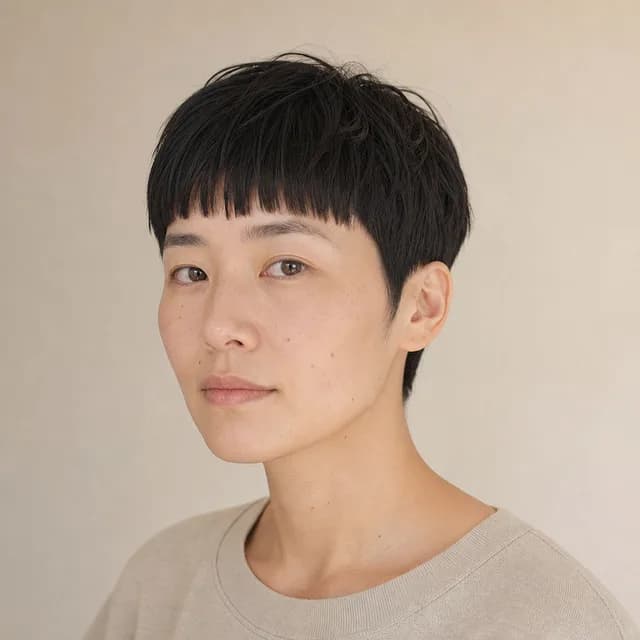
Pixie with soft bangs
- Why it works
- The fringe adds flexibility and can soften a strong front hairline.
- Best starting point
- Straight, wavy, or softly curly hair with enough front density.
- Check before cutting
- The bang should match the real growth direction and not be cut too short on a cowlick.

French bob
- Why it works
- The full lower edge can preserve weight and frame the jaw clearly.
- Best starting point
- Fine to thick straight or wavy hair, with technique adjusted for density.
- Check before cutting
- Set the exact dry line around the jaw and glasses arm before cutting.
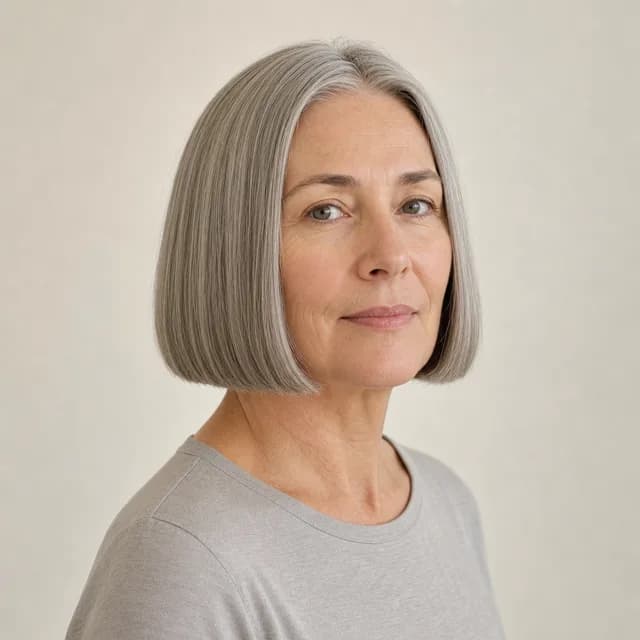
Chin-length bob
- Why it works
- A blunt or lightly graduated edge can make fine ends feel more deliberate.
- Best starting point
- Straight or softly wavy hair when a strong perimeter is the priority.
- Check before cutting
- Very thick hair may need hidden internal control to avoid a wide triangle.
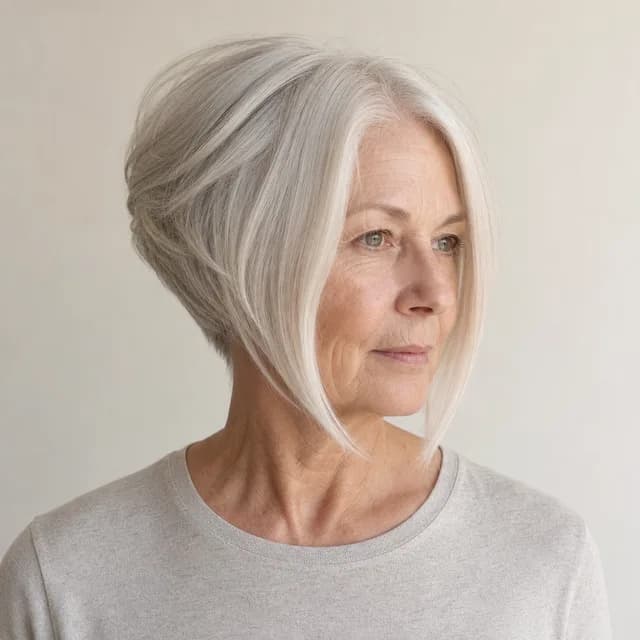
Soft graduated bob
- Why it works
- The stacked line can create a defined back silhouette without a very short top.
- Best starting point
- Straight or wavy hair with enough density for a controlled graduation.
- Check before cutting
- A dramatic stack needs more precise trims and can expose a thin crown in profile.
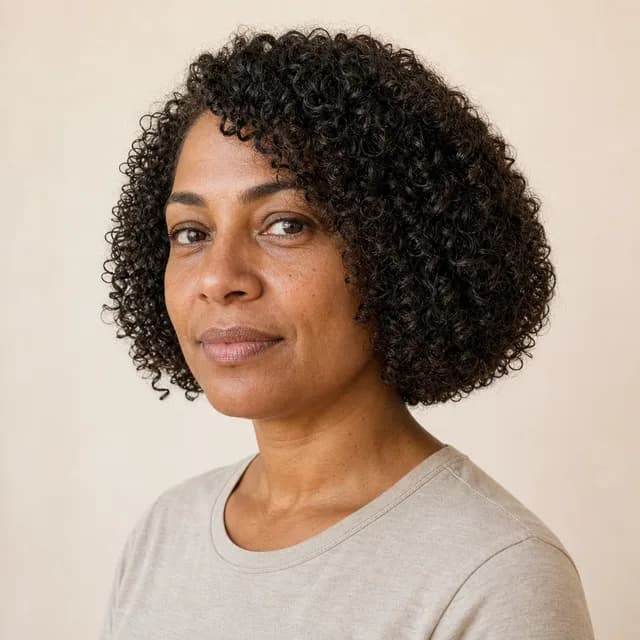
Short curly bob
- Why it works
- A rounded outline can use natural curl volume while keeping the length manageable.
- Best starting point
- Curly or coily hair with enough dry length to form a connected bob.
- Check before cutting
- Shrinkage can move a wet chin-length plan well above the jaw.
Check the cut with the details you wear every day
A reference without glasses, natural grey texture, or realistic density can hide the parts that affect the final result.
Wear your glasses
Check how the side, fringe, and ear area sit with the real frames.
Keep the grey pattern
Do not let a preview recolor or thicken the hair while it changes the cut.
Compare daily and salon effort
Ask how often the shape needs trimming and what the normal morning routine requires.
Short haircuts for older women FAQ
What short haircut is best for an older woman?
A classic pixie, long pixie, bixie, French bob, chin bob, graduated bob, or curly bob can work. Texture, density, glasses, hairline, and maintenance preference are more useful than age alone.
What short haircut works for an older woman with thin hair?
A bixie, classic pixie, long pixie, or blunt chin bob can preserve a clear shape. Avoid heavy thinning and compare the preview for invented crown density or thicker ends.
Are short haircuts low maintenance?
They can reduce washing and styling time, but a precise pixie or graduated bob may need more frequent salon trims. A chin bob can take longer to dry but often grows out more gently.
Can I preview a short cut with my grey hair and glasses?
Yes. Upload a clear photo wearing the glasses you use most. The generation should preserve grey distribution, density, facial details, and frames while changing only the haircut.