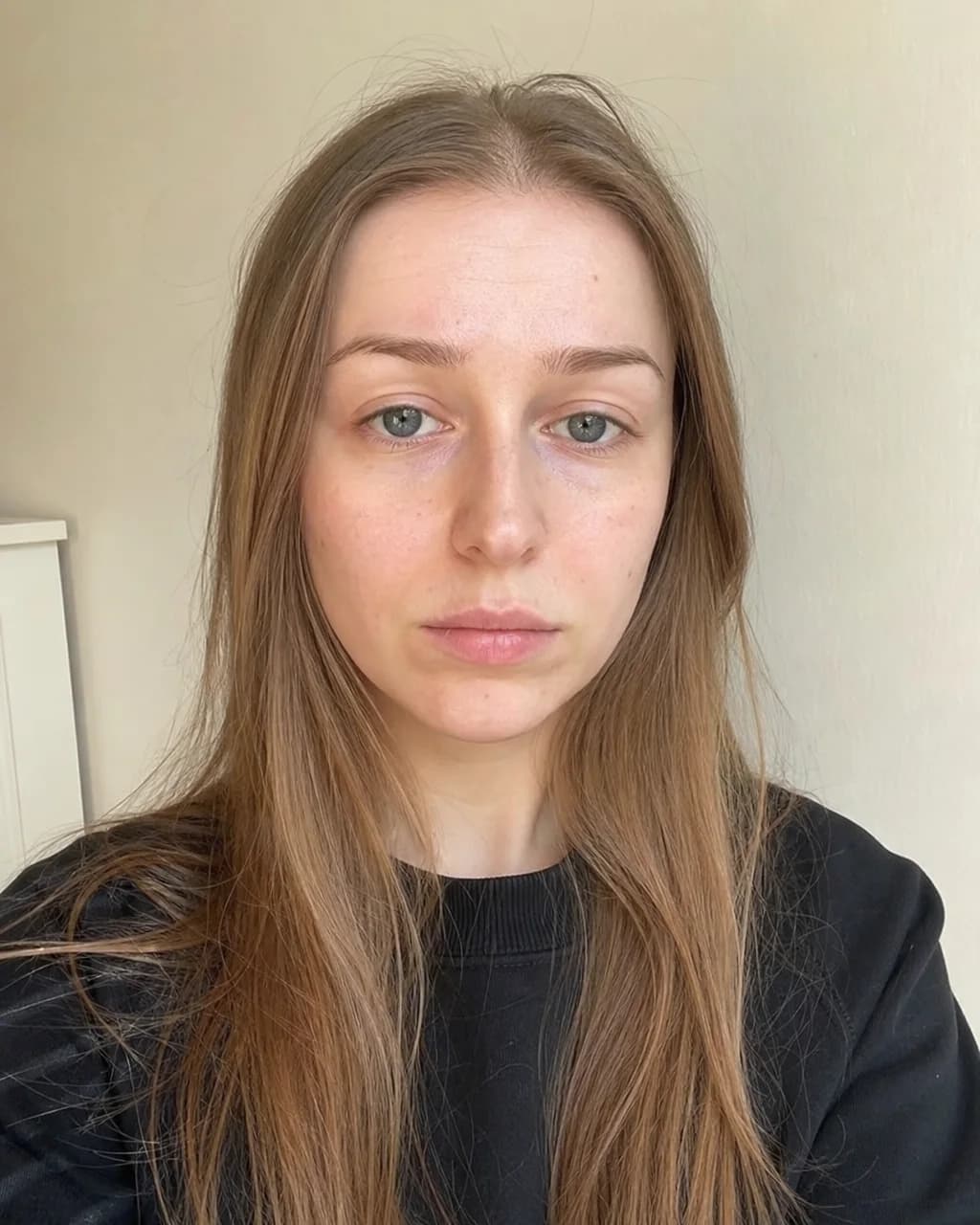
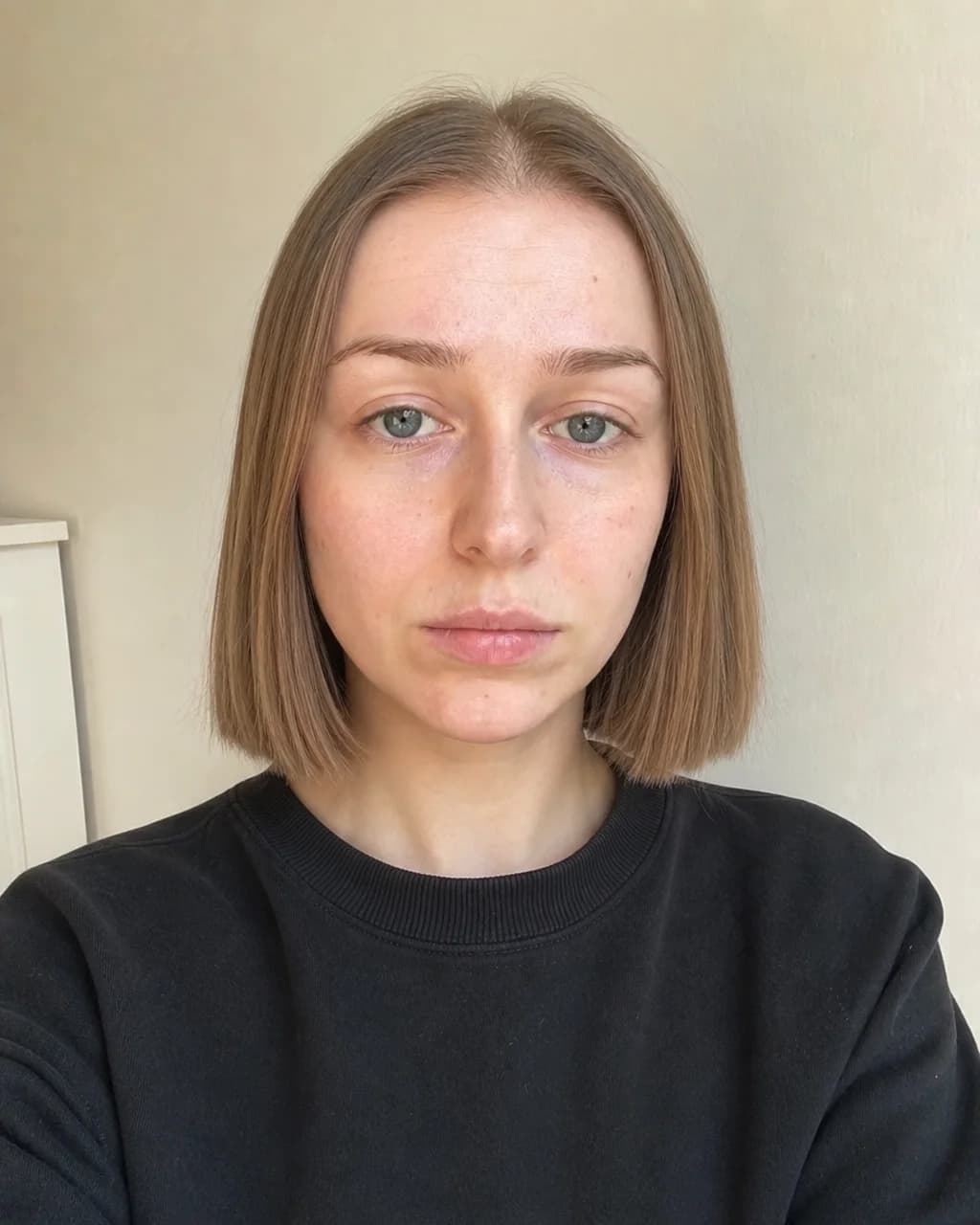
Keep weight where the shape needs it
A strong perimeter can make a bob feel more substantial. Shorter texture can keep a crop from collapsing. Both are shape choices, not density changes. The best cut uses the hair that is present instead of designing around an imaginary fuller version.
- 1Protect the perimeterBlunt or lightly graduated edges keep fine ends from looking scattered.
- 2Use selective layersAdd movement only where it helps, not through every part of the cut.
- 3Reduce contrastShorter cuts can make uneven lengths and sparse sections feel more intentional.
- 4Check the source photoIf the preview hides scalp that was visible before, discount that part of the result.
Eight cuts that work with the density you have
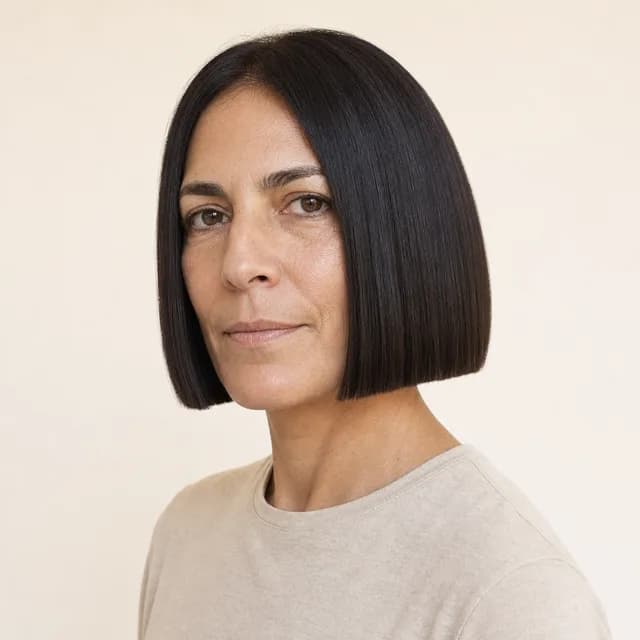
Blunt bob
- Why it can work
- Keeps a strong perimeter instead of breaking the ends into many light layers.
- Best starting point
- Straight or softly wavy hair with enough length to create one clean line.
- The honest catch
- The edge can look stronger, but the cut does not create more strands above it.
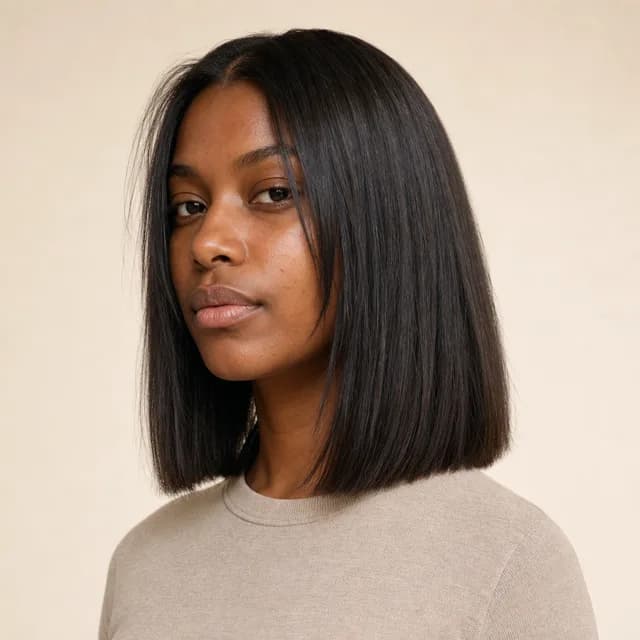
One-length lob
- Why it can work
- Preserves weight while keeping enough length to tie back or move around the shoulders.
- Best starting point
- Fine straight or wavy hair that becomes stringy when it grows very long.
- The honest catch
- Too many short layers can remove the perimeter this cut is meant to protect.
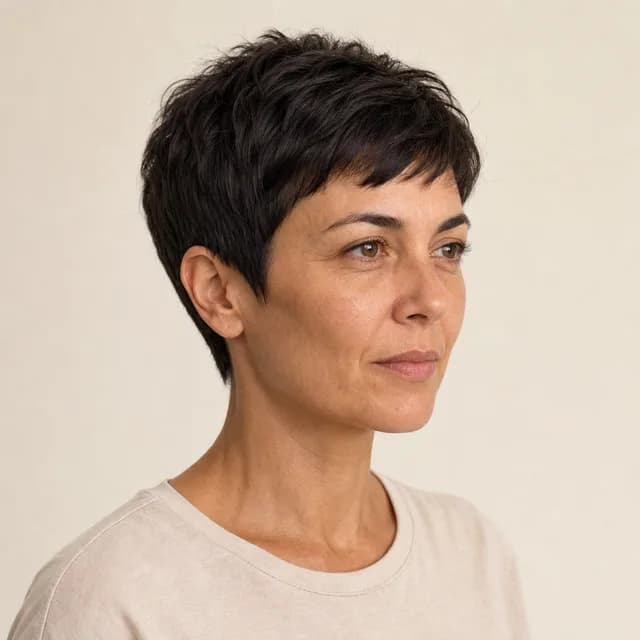
Classic pixie
- Why it can work
- Short length reduces the distance the hair needs to hold shape and lift.
- Best starting point
- Fine hair with fairly even coverage and a willingness to trim frequently.
- The honest catch
- A model may make the crown look denser. Check scalp visibility against the original photo.
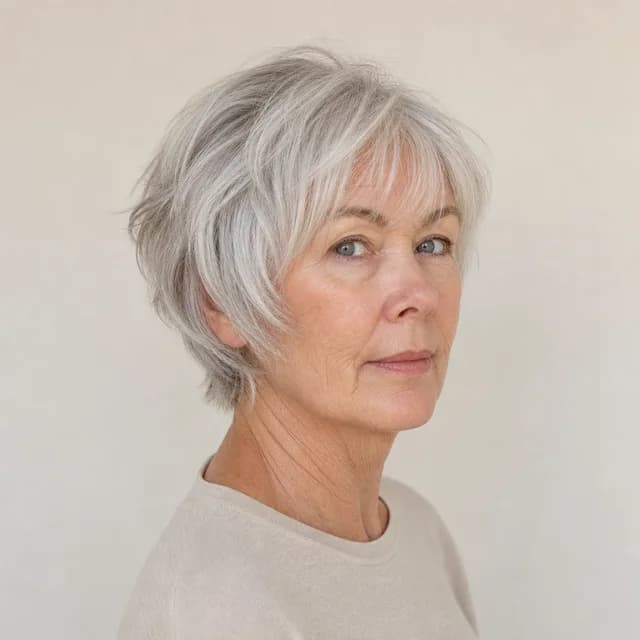
Bixie
- Why it can work
- Keeps some bob-like weight while adding shorter layers for movement through the top.
- Best starting point
- Fine straight or wavy hair that needs shape without a severe short cut.
- The honest catch
- The layer plan has to stay selective. Too much texturising can make the ends look thinner.
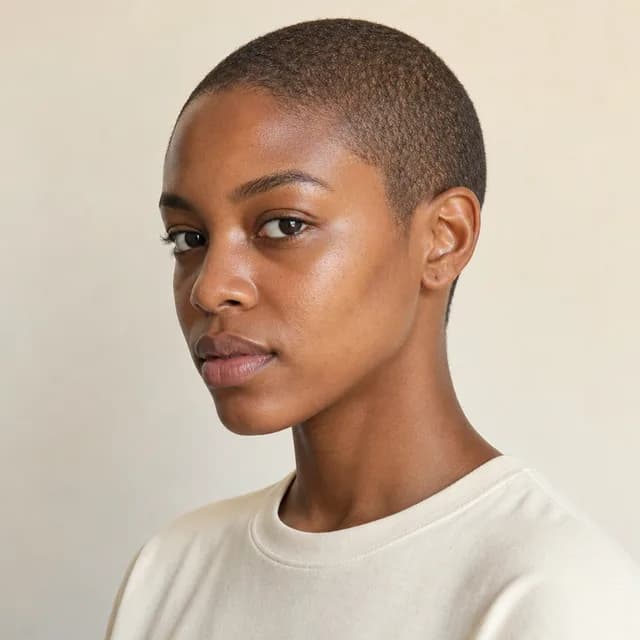
Buzz cut
- Why it can work
- Makes the length and density pattern more uniform and removes wispy contrast.
- Best starting point
- Thin or thinning hair when a direct, low-styling result feels right.
- The honest catch
- It exposes the scalp, crown, and hairline honestly. Preview those traits before committing.
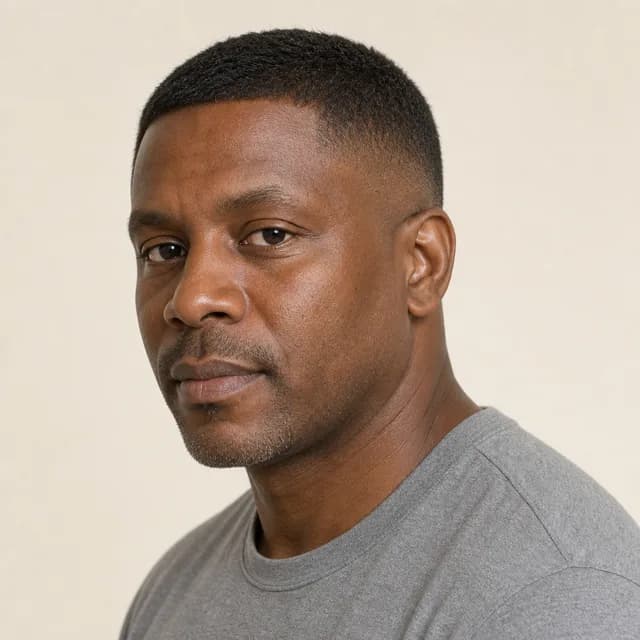
Crew cut
- Why it can work
- Keeps a little controlled height at the front while shortening the top and sides.
- Best starting point
- Fine straight hair with better density through the center front.
- The honest catch
- A high fade and tall top can create more contrast with thin temple areas.
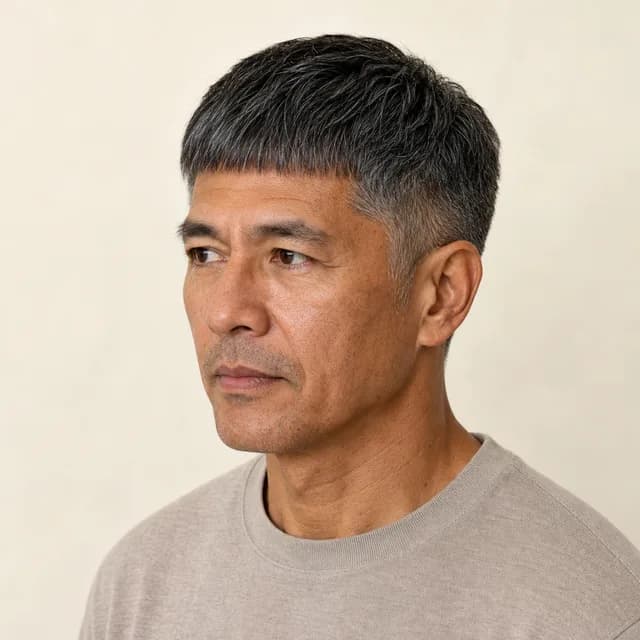
French crop
- Why it can work
- Uses short texture and a small fringe rather than asking fine hair to hold a large quiff.
- Best starting point
- Fine straight or wavy hair with enough front coverage for a broken fringe.
- The honest catch
- Keep the fringe irregular. One thick, perfect line usually belongs to a denser reference head.
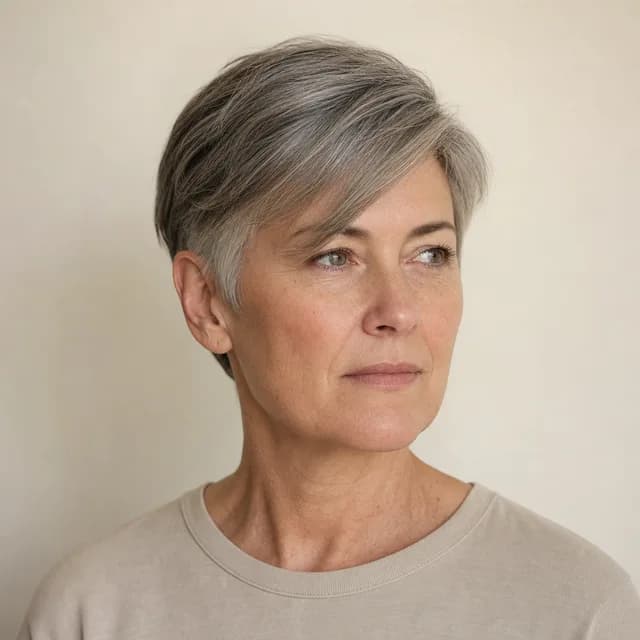
Soft side-swept fringe
- Why it can work
- A diagonal direction lets a smaller section of hair create movement without a dense curtain.
- Best starting point
- Fine hair with some front length and a part that naturally moves to one side.
- The honest catch
- Heavy product can group fine strands and expose more scalp, so use a light finish.
Preserve the edge or reduce the contrast
The blunt bob keeps a strong line at the bottom of fine long hair. The buzz cut shortens everything so thin areas do not sit beside long, darker sections. Both can work, but they solve the density question in opposite ways.
 FrontThree-quarterProfile
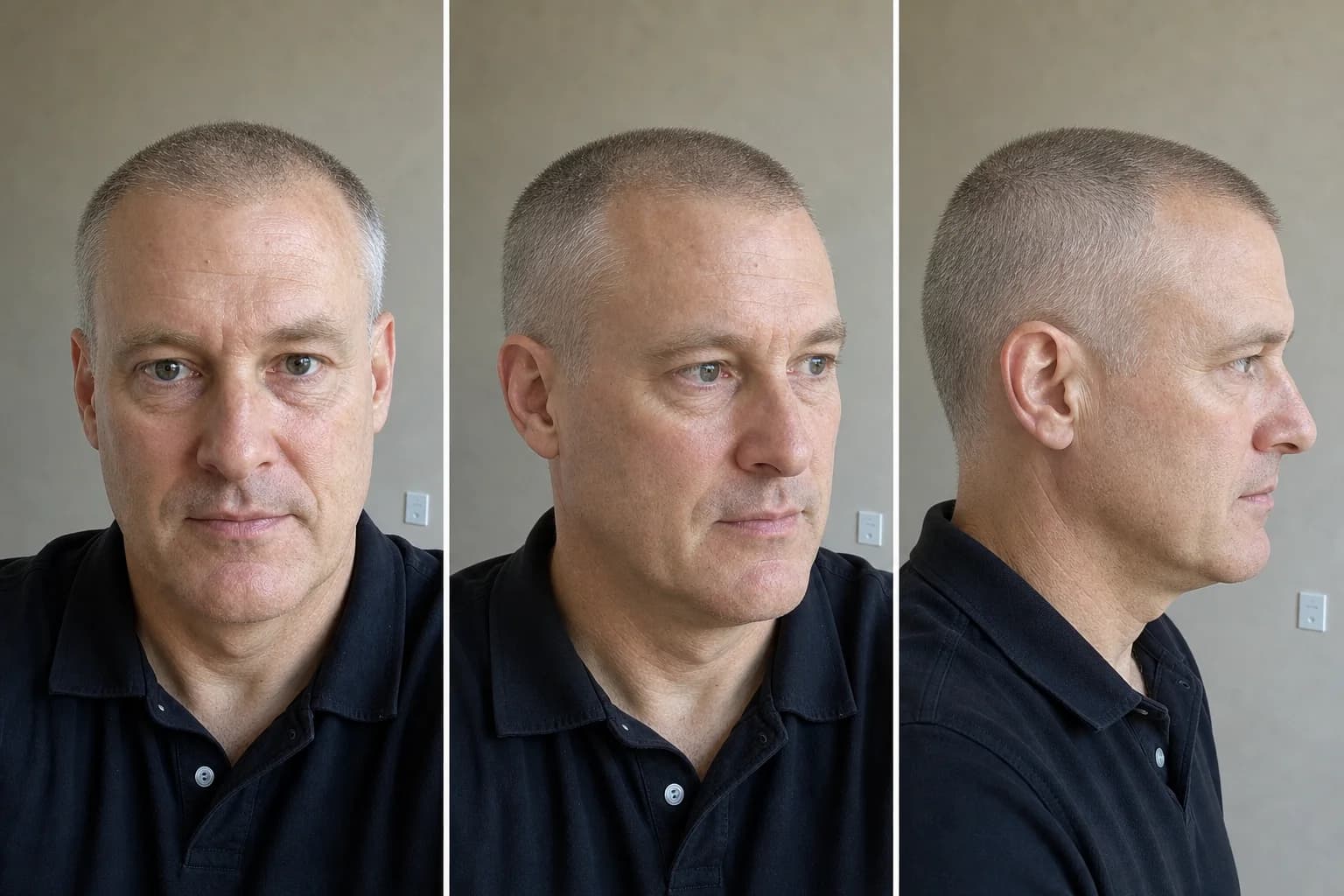 FrontThree-quarterProfile
Three questions that protect fine hair
Where will you keep weight?
The answer should name the perimeter, crown, front, or another specific part of the shape.
Do I need thinning shears?
Fine or low-density hair often needs restraint. Ask what problem the extra texturising would solve.
What does it do without styling?
A cut that only looks full after a blowout should be described as a styled option, not a wash-and-go one.
Thin and fine hair haircut FAQ
What haircut makes thin hair look fuller?
A blunt bob, one-length lob, pixie, crop, crew cut, or buzz cut can improve shape and reduce wispy contrast. The best option preserves weight where you have it. A haircut can change the silhouette, but it cannot create more hair strands.
Are layers good for thin or fine hair?
Selective layers can add movement and prevent a flat shape. Too many short or heavily thinned layers can remove the perimeter and make the ends look lighter. Ask where the stylist plans to keep weight before agreeing to extensive texturising.
Is short or long hair better for thin hair?
Shorter and medium cuts are often easier to shape because the hair carries less length, but there is no universal rule. Long hair can work when the perimeter stays healthy and the cut does not remove too much weight.
Can I preview a haircut without the AI adding volume?
The tool explicitly asks the image model to preserve density, scalp visibility, and the hairline. Image models can still make flattering mistakes, so compare the output with the source and keep the density assessment and feasibility note beside the preview.