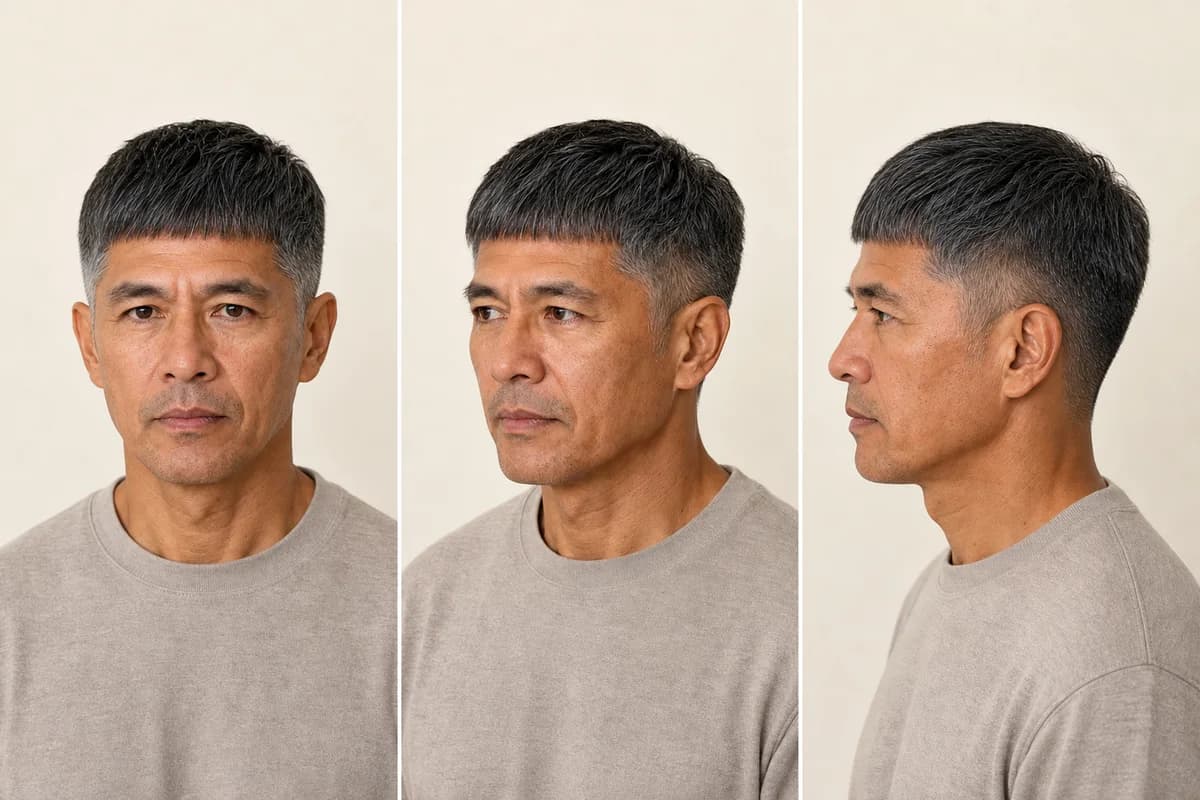
The top, crown, and hairline need different strategies
A forward crop may help at the front. Short uniform length can reduce contrast across a thin crown. A side sweep can work when there is enough stable density, but a long comb-over can expose the very gap it tries to hide.
- 1Fine but evenProtect the perimeter and use light product so strands do not clump.
- 2Thin at the frontA short broken fringe can use available front hair without drawing a perfect wall.
- 3Thin at the crownShorter, more uniform length can reduce the contrast between dense and sparse areas.
- 4Receding cornersKeep the real temple shape visible and choose whether to expose or soften it.
Eight cuts that work with the hair present
Use the image as a shape reference, not a density promise. The useful note is where the cut keeps weight and where it reduces contrast.
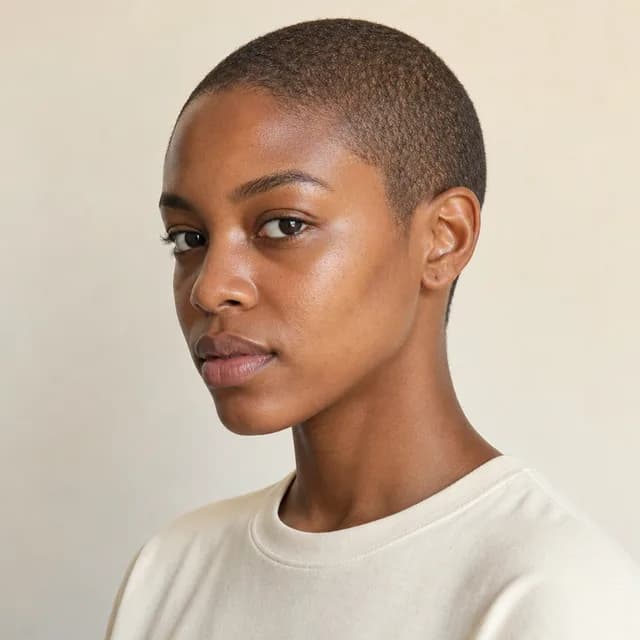
Buzz cut
- Why it works
- Uniform short length can make a varied density pattern feel more deliberate.
- Best starting point
- Thin or thinning hair when a direct, low-styling result feels right.
- Check before cutting
- It exposes the crown, scalp, ears, head shape, and temple corners, so preview it first.
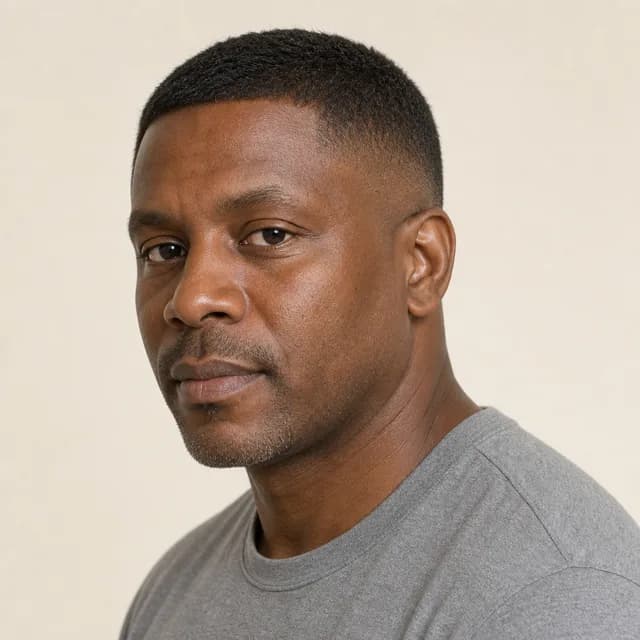
Crew cut
- Why it works
- The short top reduces collapse while a small front lift can add direction.
- Best starting point
- Fine or thinning hair with more stable density through the center front.
- Check before cutting
- A very high fade can increase contrast against thin temple areas.
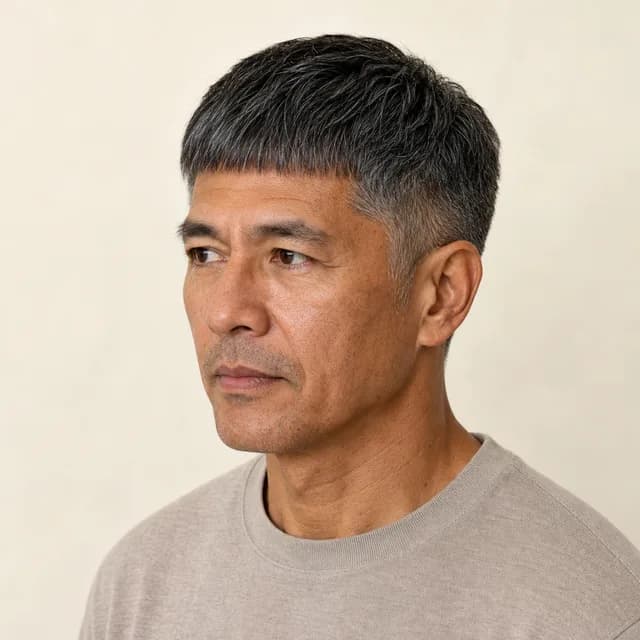
French crop
- Why it works
- Forward texture can soften the front while keeping the top short and practical.
- Best starting point
- Fine straight or wavy hair with enough front coverage for a small fringe.
- Check before cutting
- The model should not fill temple corners or thicken the fringe beyond the source density.
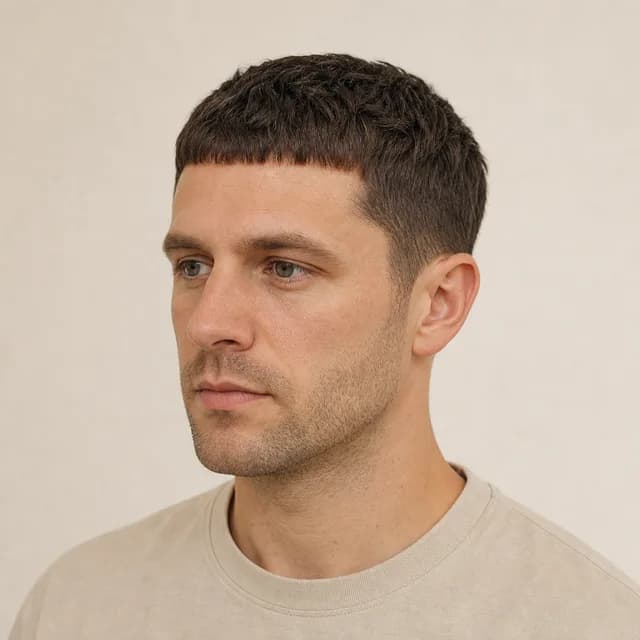
Caesar cut
- Why it works
- The controlled length can reduce contrast and avoids a high-volume top.
- Best starting point
- Straight or slightly wavy hair with stable density across the front center.
- Check before cutting
- A perfectly blunt fringe may look artificial when the real front density is uneven.

Short textured crop
- Why it works
- A small amount of texture can prevent the top from sitting as one flat sheet.
- Best starting point
- Fine but fairly even straight or wavy hair.
- Check before cutting
- Heavy thinning shears can remove too much of the density the cut needs.
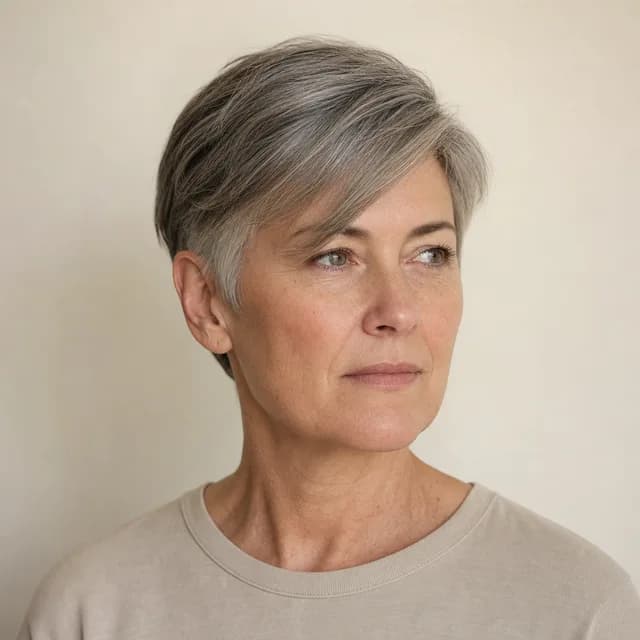
Soft side sweep
- Why it works
- A diagonal direction can add movement with less hair than a full curtain fringe.
- Best starting point
- Fine hair with a stable side part and some front length.
- Check before cutting
- Keep the sweep short and light so it does not become a transparent comb-over.
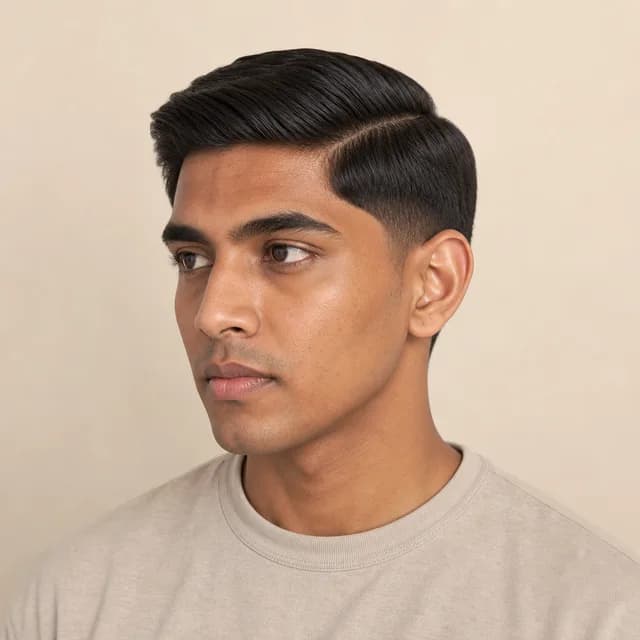
Short side part with taper
- Why it works
- It can organize fine hair when the top coverage is still stable enough for a natural part.
- Best starting point
- Fine straight hair with an established part and moderate top density.
- Check before cutting
- Do not treat a long cross-head sweep as a substitute for missing density.
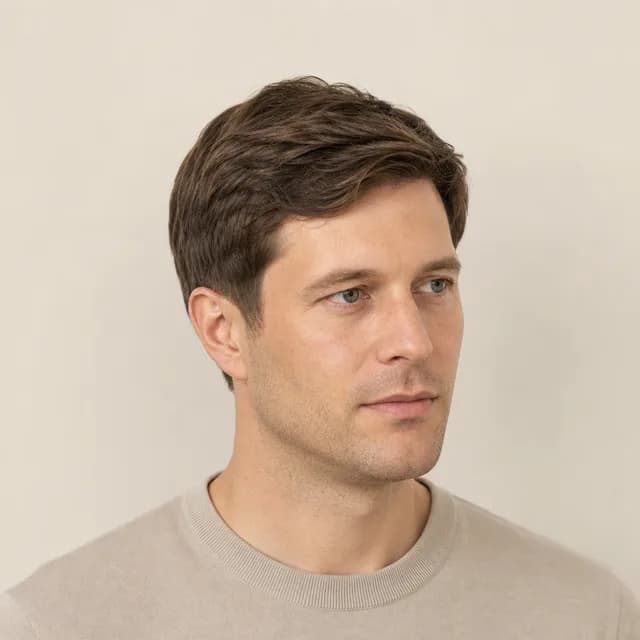
Short scissor top with taper
- Why it works
- Keeping the fade low can avoid extra contrast at receding temple corners.
- Best starting point
- Fine or thinning hair when a conservative professional shape is preferred.
- Check before cutting
- Set the top length by the weakest area, not the densest front section.
Three checks catch the flattering mistakes
Image models often improve hair automatically. Compare the source and output before treating any result as a forecast.
Check scalp visibility
The crown and part should not become darker or more filled than the source photo.
Check the hairline
The temple corners, center point, and front height should stay in the same place.
Check strand behavior
Fine straight hair should not become thick, wavy, or heavily voluminous without styling.
Haircuts for thin hair men FAQ
What haircut is best for men with thin hair?
A buzz cut, crew cut, French crop, Caesar, short textured crop, soft side sweep, or low taper can work. The best choice depends on whether the main issue is fine strands, low density, a thin crown, or receding corners.
Is short hair better for thinning men?
Shorter hair often reduces wispy contrast and is easier to shape, but there is no universal length. A small side sweep can still work when the top coverage and growth direction support it.
Should thin hair have texture?
Small point-cut separation can help fine hair move. Heavy thinning or too many short layers can remove weight and make the scalp more visible, so the technique should match the actual density.
Can AI show my haircut without adding hair?
The tool tells the model to preserve density, scalp visibility, and the hairline. Models can still make flattering errors, so compare the source and output at the crown, part, and temple corners.