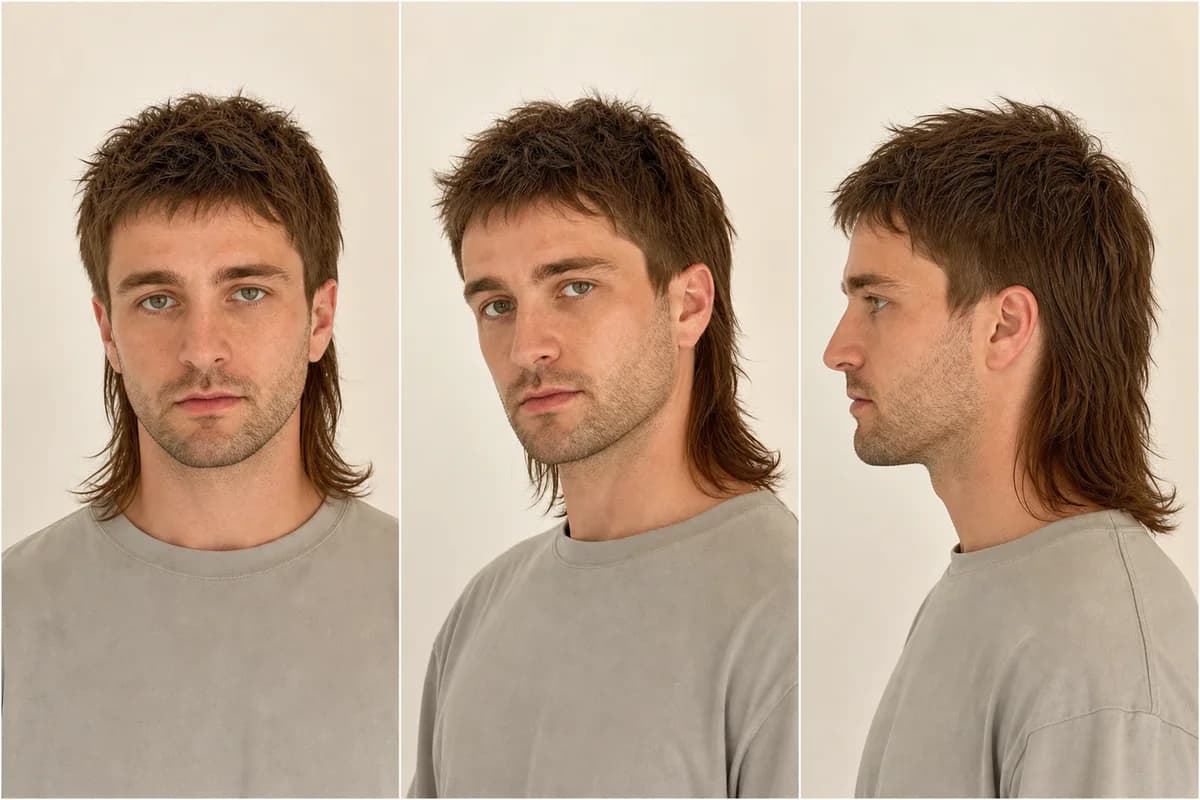
The back and sides decide what kind of mullet it is
Reference photos often focus on the front, but the profile carries the haircut. Decide how the side connects to the back before debating texture or product.
- 1Soft modern mulletKeeps a visible path from the temple through the back. It grows out more easily.
- 2Mullet fadeCreates stronger contrast around the ear and needs more frequent edge cleanup.
- 3Mullet taperCleans the sideburn and neckline while keeping more side weight than a fade.
- 4Shaggy mulletUses connected layers and movement rather than a tight barbered outline.
Eight versions worth comparing
Use the profile, starting length, and texture note under each image. A good reference should match more than the mood of the photo.
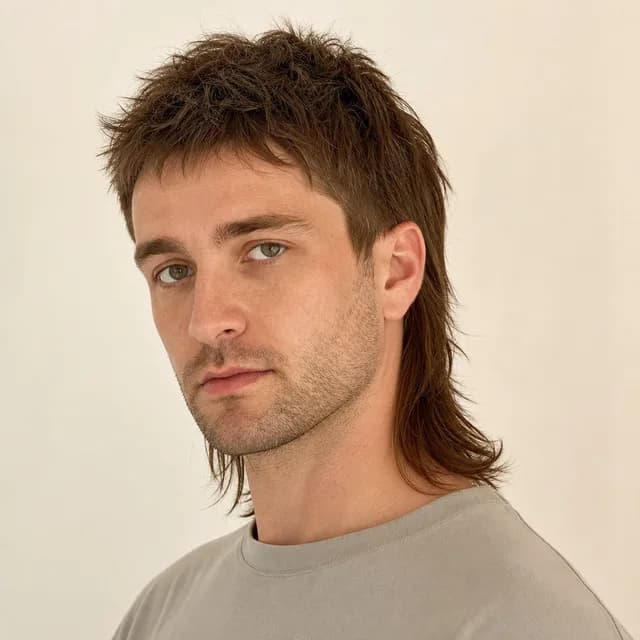
Soft modern mullet
- Why it works
- The connected layers make the trend visible without creating a hard shelf above the ear.
- Best starting point
- Straight, wavy, or loose curly hair with enough crown and nape length.
- Check before cutting
- If the sides are faded too high, the result becomes much sharper than this reference.

Modern mullet fade
- Why it works
- The curved fade frames the ear while leaving the top and nape as the visual center.
- Best starting point
- Dense straight, wavy, curly, or coily hair that can support a clear contrast.
- Check before cutting
- The fade needs regular cleanup and exposes more scalp around the ear.

Modern mullet taper
- Why it works
- A low taper keeps the shape current without removing all of the width at the temples.
- Best starting point
- Someone who wants a softer grow-out and less scalp contrast than a fade.
- Check before cutting
- Ask exactly how high the taper will rise, since a high taper changes the balance.

Shaggy modern mullet
- Why it works
- It reads through layering and movement instead of a sharp fade line.
- Best starting point
- Medium straight or wavy hair that already has useful length around the ears.
- Check before cutting
- Heavy thinning can leave the ends weak and make the back look stringy.
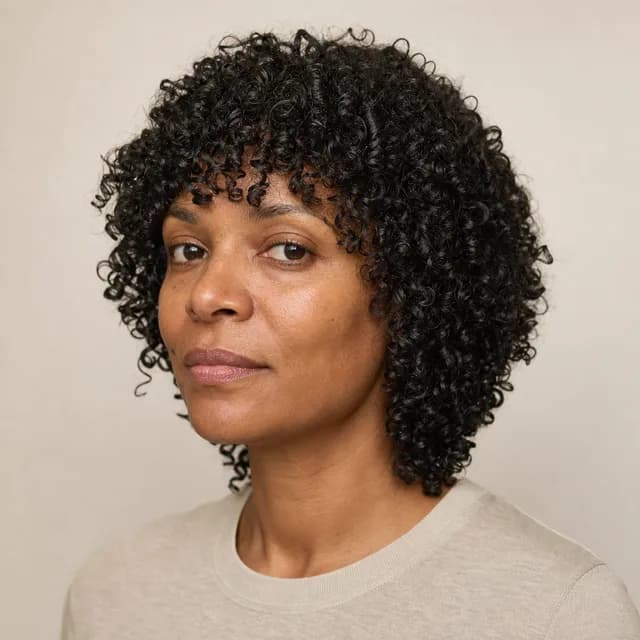
Curly modern mullet
- Why it works
- Natural curl creates the volume and separation the cut needs without forcing a straight shape.
- Best starting point
- Loose to medium curls with enough dry length through the crown and nape.
- Check before cutting
- Plan the shortest curl dry because shrinkage can remove the intended fringe or back length.

Short modern mullet
- Why it works
- It creates the front-to-back idea without waiting for shoulder-level length.
- Best starting point
- Short straight or wavy hair with enough nape length to show in profile.
- Check before cutting
- If the back is cut too tight, this becomes a crop rather than a mullet.
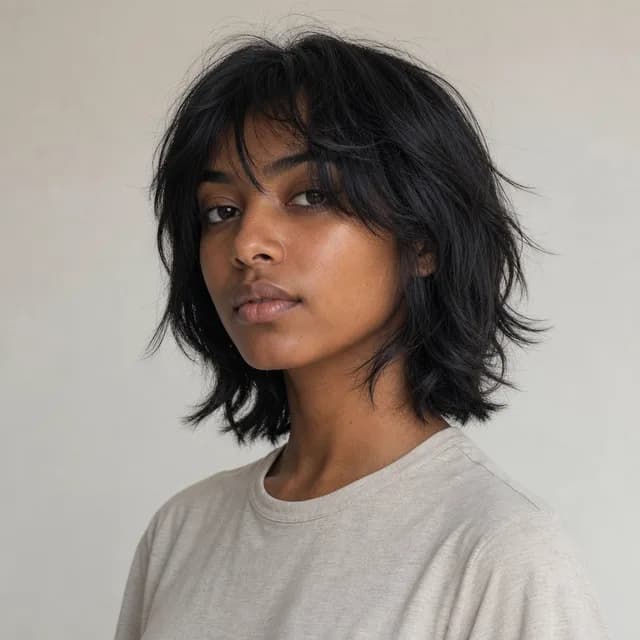
Straight-hair modern mullet
- Why it works
- Layer separation gives straight hair movement while keeping its real texture visible.
- Best starting point
- Medium straight hair with moderate density and some willingness to use product.
- Check before cutting
- A curly reference will not predict this result. Match the reference texture to your own.
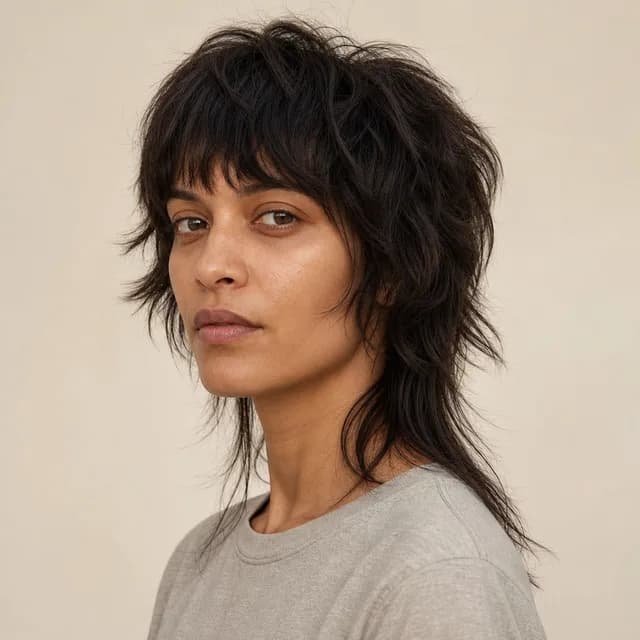
Long wolf mullet
- Why it works
- It keeps the mullet proportion while blending into a longer layered haircut.
- Best starting point
- Medium to long straight, wavy, or curly hair with enough density for crown layers.
- Check before cutting
- Too many short layers can create a wide crown and thin-looking ends.
Name the back, the side, and the finish
The word mullet is too broad on its own. These three choices turn a trend name into a usable haircut plan.
Show the profile
Mark where the back should land and whether the line is soft, choppy, or blunt.
Set the side treatment
Ask for full scissors, a low taper, or a named fade height. Do not leave this implied.
Match your real texture
Choose a straight, wavy, curly, or coily reference that behaves like your hair.
Modern mullet haircut FAQ
What is a modern mullet haircut?
A modern mullet keeps more length through the back than the sides and front, but usually blends the sections with texture, a taper, a fade, or connected layers. It can be soft and shaggy or sharp and barbered.
Can straight hair get a modern mullet?
Yes. Straight hair usually needs deliberate layers and piecey styling to show the shape. Use a straight-hair reference rather than expecting the volume from a curly mullet photo.
What is the difference between a mullet fade and a mullet taper?
A fade removes more length and blends toward visible skin or very short hair around the side. A taper usually cleans only the sideburn and neckline, keeping more weight around the temple.
How long does hair need to be for a modern mullet?
A short version can begin when the nape is visibly longer than the side. A softer connected version needs enough crown and back length to form layers. The profile image is the best way to judge whether your starting length is ready.